Cultivating Ghana
Our Services
Growing Ghana,
Empowering Farmers
Cultivating Ghana: AFGL’s Commitment to Ghana
Arima Farms provides a range of services designed to support and empower small farmers in Ghana. These include technical assistance in farm management, access to high-quality seeds and sustainable farm inputs, and guidance on best practices for irrigation and mechanization. Through our services, we aim to enhance agricultural productivity and ensure the sustainability of farming practices.
In addition to on-ground support, Arima Farms leverages advanced technologies like SmartFarmSpace to bring precision, traceability, and data-driven decision-making to every farm. Our collaborative model connects smallholders with training, financing, insurance, and market access—empowering them to become independent agri-preneurs. By integrating innovation with local knowledge, we’re building resilient farming communities that thrive economically and contribute meaningfully to Ghana’s food security.
Arima
Service Model
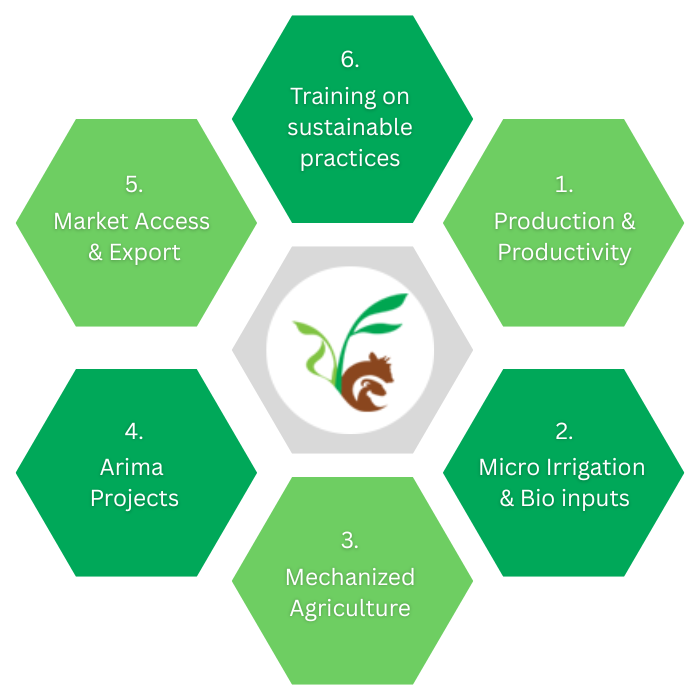
Production & Productivity
Enhancing crop yields through improved techniques, quality inputs, and efficient land use.
Micro Irrigation & Bio Inputs
Promoting eco-friendly irrigation systems and organic inputs for sustainable, resource-efficient farming.
Mechanized Agriculture
Boosting efficiency with modern equipment for land preparation, planting, and harvesting processes.
Arima Projects
Integrated agri-initiatives transforming rural Ghana through innovation, infrastructure, and community engagement.
Market Access & Export
Connecting farmers to local and global markets for better pricing and profitability.
Training on Sustainable Practices
Empowering farmers with knowledge on eco-friendly, productive, and long-term agricultural methods.
Bridging Ghana’s Wheat Gap
Reducing wheat import dependency
Wheat is not produced in Ghana. Entire requirement of about 850,000 MT of wheat is imported. Since global wheat prices are increasing year after year, it is a great burden for the Ghanian Government to meet the requirements.
AFGL aims to reduce wheat import dependency through sustainable, local wheat production solutions.
- Rising global prices make wheat imports increasingly unsustainable for national food security.
- Local wheat cultivation can create jobs, reduce costs, and boost self-reliance.
Combating drought impact through resilient farming
Securing Ghana’s Corn Future
Corn is predominantly dependent on rainfall. The recent extended dry spell across Northern and Upper West Regions of Ghana largely impacted the yield. It is reported that an estimated 871,000 hectares may have been impacted by the drought, affecting the livelihoods of some 436,000 farmers. Consequently, the import of corn is inevitable.
- Climate variability is a major threat to corn-dependent rural livelihoods in Ghana.
- Strengthening irrigation and drought-resistant practices can reduce import reliance and safeguard livelihoods.
Investing in adaptive technologies ensures consistent production and food system stability.

Strengthening local rice production
Scaling Rice for Ghana’s Growing Needs
Rice is the most important cereal crop in Ghana after corn and has become a major staple food. Rice consumption will increase with improving prospects for greater economic stability in future.
To meet this growing demand AFGL has researched improved rice varieties, modern farming techniques, and efficient irrigation systems with the help of CSIR. We empower farmers with training, provide access to quality resources, and offer market linkages that ensure our rice production becomes not only self-sufficient but also a driver of rural economic development in Ghana.
- Ghana’s rising urbanization is fueling consistent growth in rice consumption.
- Expanding local cultivation reduces import bills and strengthens food sovereignty.
Cultivating Ghana’s Future
Advancing food security through tech-driven, farmer-centric partnerships with Arima Farms
Ghana's agriculture is expected to continue to transform using technology, improved infrastructure, and new investments. The goal is to increase productivity, reduce reliance on imports, and improve food security.
Arima Farms aims to be a partner in this progress by its innovative farmer centric activities.
Agri-inputs for increased production and productivity
Driving Innovation in Agri-Tech and Farm Equipment.
To boost yields and improve farm efficiency, Arima Farms promotes the use of high-quality seeds, bio-fertilizers, and eco-friendly bio-pesticides. Alongside sustainable inputs, we introduce smart irrigation systems and mechanized equipment to reduce labor.
intensity and optimize farm operations. This integrated approach ensures higher crop output, healthier soils, and long-term productivity for smallholder farmers in Ghana.
Seeds
Apart from this research initiative, Arima will also take up activities like quality seed production and seed multiplication activities in small farmers’ fields to improve their income and prosperity. Efforts will be made to make available certified quality seeds to all farmers including various pulse and vegetable seeds.
Bio-fertilizers and Bio-pesticides
Chemical fertilizers and chemical pesticides are now considered unsustainable inputs due to their increased cost and heavy toll on the environment. Our soil, water bodies and air is being polluted with hazardous chemicals leading to health problems. Importing countries and local consumers are increasingly demanding safe and non-toxic food. Keeping this in mind, Arima Farms have taken initiatives to introduce safe and sustainable nature based and organic crop nutrients and crop protection substances.
Irrigation
Arima is increasingly dependent on various irrigation projects to suit various crop segments throughout Ghana. Whether it is drip irrigation, sprinkler irrigation or other innovative methods of irrigation, it is going to transform the way farmers do agriculture at present. Cultivation area will increase because of two crops in a year where one was practiced in the past. Productivity will increase because of sufficient soil moisture for the plants throughout the crop period. Green energy through solar pumps will be made available. We will realise all these plans through our valuable arrangement with Jain irrigation.
Farm Mechanization
Traditionally humans and draft animals were used for farm power needs. A study of draft animals revealed that bullocks and buffaloes pull about 10% of their body weight, camels about 18% of the body weight and donkeys about 34%. For the current level of intensive farming and required levels of productivity, animal power will not be adequate. The human power availability also is decreasing steadily. As a result, electro-mechanical sources supplement and substitute animate sources. For stationery operations like operation of irrigation pump, power thresher, chaff cutter and grinder, engines and motors are in use. Whereas for tractive field operations like field preparations, planting, weeding and harvesting, there are tractors and power tillers run by diesel engines mounted on them.
Powering Ghana’s Farms
Boosting productivity through advanced equipment in partnership with Mahindra & Mahindra.
The average farm power availability in Ghana is quite low compared to other regions like India. Specifically, it was reported to be 0.0588 kW/ha in 2020, with projections suggesting an increase to 0.0752 kW/ha by 2025. This contrasts with India's projected farm power availability of 2.2 kW/ha in 2020.
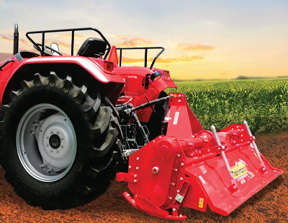
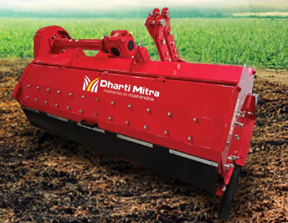
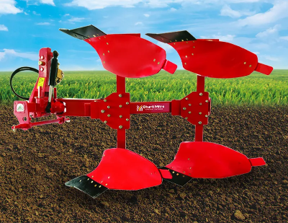
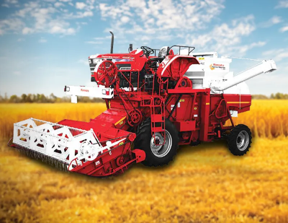
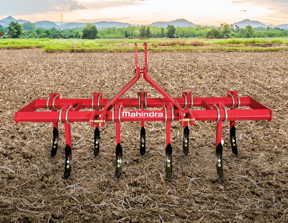
- Rotavators, Tillers, Cultivators, Threshers, Ploughs, Seeders, round balers, Straw Reapers, Front Loaders, etc.
- All these equipment can be extensively used for land preparation, harvesting, post harvesting and material handling.
Arima Farms are collaborating with Mahindra and Mahindra Group to bring the tractors and farm equipment to Ghana to reduce drudgery and to largely improve farm operations.